RHUH History
Rafik Hariri University Hospital (RHUH) is an independent public institution, it operates under custody of MOH, with its own board of directors including a government representative.
The hospital was established under the name of Beirut Governmental University Hospital based on the decree No. 12962 date 2/9/1998, and the hospital’s name was adjusted to Rafik Hariri University Hospital based on the decree No. 16389 date 15/2/2006.
RHUH idea first emerged from the urge to have a reputable governmental hospital in Beirut. And on the second of February 1979, the decision was finally taken by the Council of Ministers to build a governmental hospital of 500 beds, on a public owned property, in Bir Hassan in Beirut.
After 30 years of back and forth, the Ministry of Public Health and Ministry of Public Works and Transportation conducted the relevant technical studies for the hospital. However, civil war erupted and thus delayed the construction works in 1995, and it wasn’t finalized until 2000.
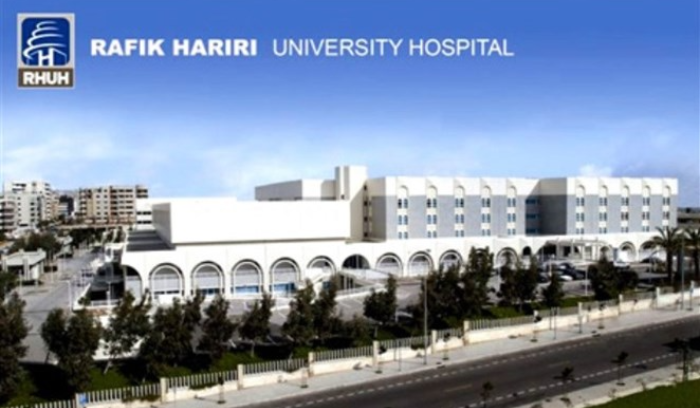
Similar to all Public Institutions, its construction was financed by the Lebanese Government through MOF, in particular the Council of Development and Reconstruction as well as by a low interest loan from Saudi Development Fund and the Islamic Development Bank. In addition, the four auxiliary buildings were funded by a grant from King Fahed of KSA in person.
Our Vision
Our Mission:
Rafik Hariri University Hospital (RHUH) is a governmental teaching hospital committed to deliver quality care to the population through integrated, evidence-based medical and health services, at an affordable, sustainable cost, thus enhancing its position as the premier teaching hospital in the public sector in Lebanon.
1) Ensuring excellent medical care
Through the highest and most advanced medical and hospitalization available services, to all social classes, without any distinction, for affordable rates.
2) Becoming an important national and regional center
receiving patients, namely those who need advanced treatment or special and developed equipment.
3) occupying an important national and regional role
as for teaching medicine, training students and carrying out scientific researches.
4) Developing specialized and distinguished health centers
in various fields, as Organs Transplant and Donation Centers, Heart Diseases Prevention and Care Centers, Children and Adults Cancer Treatment Centers.
1) Practicing health care
as an integrated team of caring multi-disciplinary physicians, nurses and allied health professionals who are focused on the needs of patients without distinction.
2) Educating and training
physicians, nurses and paramedical professionals and be a dependable source with regards to health information for patients and public in general.
3) To play a leadership role
in addressing, supporting and responding to the health needs of the country, in close consultation with the Ministry of Health.
4) To commit to quality
through the continuous improvement of all processes that support patient care, education and research.
5) To care for and treat
patients, staff and community with respect and dignity.
6) To foster teamwork
personal responsibility, integrity, innovation, trust and communication.
7) To allocate resources
to insure cost effectiveness, efficiency and the sustainability of quality care.
8) To conduct basic and clinical research programs
to improve patient care and to benefit society.
9) To benefit our country
through patient care, education and research; to support the community in which we live and work; and to serve appropriately patients in difficult financial circumstances.
Our Core Values
Our Goals
1- National and Regional Medical Center: To offer the best medical services according to the most advanced scientific qualifications, standards and techniques, in all fields, to all patients within the Lebanese territory and to patients abroad, against affordable costs.
2- Educational Medical Center: To teach and train medicine students on all levels and in all majors, and to train all other technical and scientific specializations directly connected or related to medicine and medical services.
3- A medical center that contributes through the medical services, scientific studies and documentary information it offers, in planning, designing and executing the public national medical policy of the Lebanese state.
4- A medical center that spreads awareness and preventive health culture in society.
5- A medical center that organizes and covers medical and scientific conferences on the national and regional levels.
6- A medical center that constitutes a national reference for scientific and medical data.
7- Medical Researches Center: A medical center for scientific and applied researches and studies.
1- Upgrade the Lebanese Public Health System to advanced international levels. The success of this hospital paves the way towards reforming the whole Lebanese Public Health System which shall impact all health establishments and sponsoring institutions in Lebanon.
2- To offer the latest and most advanced medical and surgical services to all social classes of patients, without any distinction and at a reasonable rate to the citizen.
3- Create distinguished, developed and specialized health centers in many
fields as:
- Center for Organs Donation and Transplant.
- Center for protection and care for heart diseases.
- Center for neurosciences.
- Adults and children Cancer Treatment Center.
4- To ensure advanced training programs to students and graduates of medicine, nursing and pharmacy at the national Lebanese university. The classification of this establishment as a university teaching hospital helps basically in teaching and training all students in medicine, pharmacy and nursing not only at the Lebanese University, but also at AUB offering them two important opportunities: continuity as well as stability in their learning and training system.